
Wagoner County Arrest Warrants Explained
In Wagoner County, an arrest warrant starts with a verified complaint brought to a magistrate. The magistrate weighs whether an offense occurred and whether reasonable ground exists to think the defendant committed it. If both hold, the law directs that a warrant for arrest issue to a sheriff, constable, marshal, or policeman. The document itself names the person, the offense, the court or county, the officer who issued it, and the date. So a Wagoner County arrest warrant is not a vague label. It is a record with named parts, rooted in 22 O.S. §171, and it points you toward the right office when you need answers. A bench warrant works differently, since it follows a missed court appearance or a compliance problem rather than a complaint. A search warrant is different again, because it authorizes a search of a described place, person, or property. Knowing which type you face tells you which records channel to use in Wagoner County.
How 22 O.S. §171 Starts a Wagoner County Arrest Warrant
Probable cause starts with a sworn complaint or affidavit. From there, a Wagoner County case can grow into a summons, an arrest, service and return entries, bond, or further court orders. A public docket may show only part of that story, especially with a sealed record, a juvenile matter, or an active investigation. For a county case, Title 22 and the Wagoner Court Clerk carry the legal and local record routes. A city matter turns on the municipal code and the clerk who issued the paperwork.
Inside a Wagoner County Arrest Warrant
A warrant record shows the shape of the order, but the online version is not a final status certificate. Wagoner County case formats typically carry a court prefix, a year, and a sequence number. The county publishes no official warrant-number format, so treat any example as a case-key style only.
| Case key | County, court, and case number such as CF-YYYY-NNN. |
|---|---|
| Complaint | Sworn factual basis and offense description supporting the request. |
| Issuing authority | Magistrate or judge, court, county, signature, and issue date. |
| Bond | Amount and type, or a no-bond condition, confirmed with the court or sheriff. |
| Return | Serving agency, date served, returned, recalled, or another status event. |
The Wagoner Jail and Bond Record Are Separate
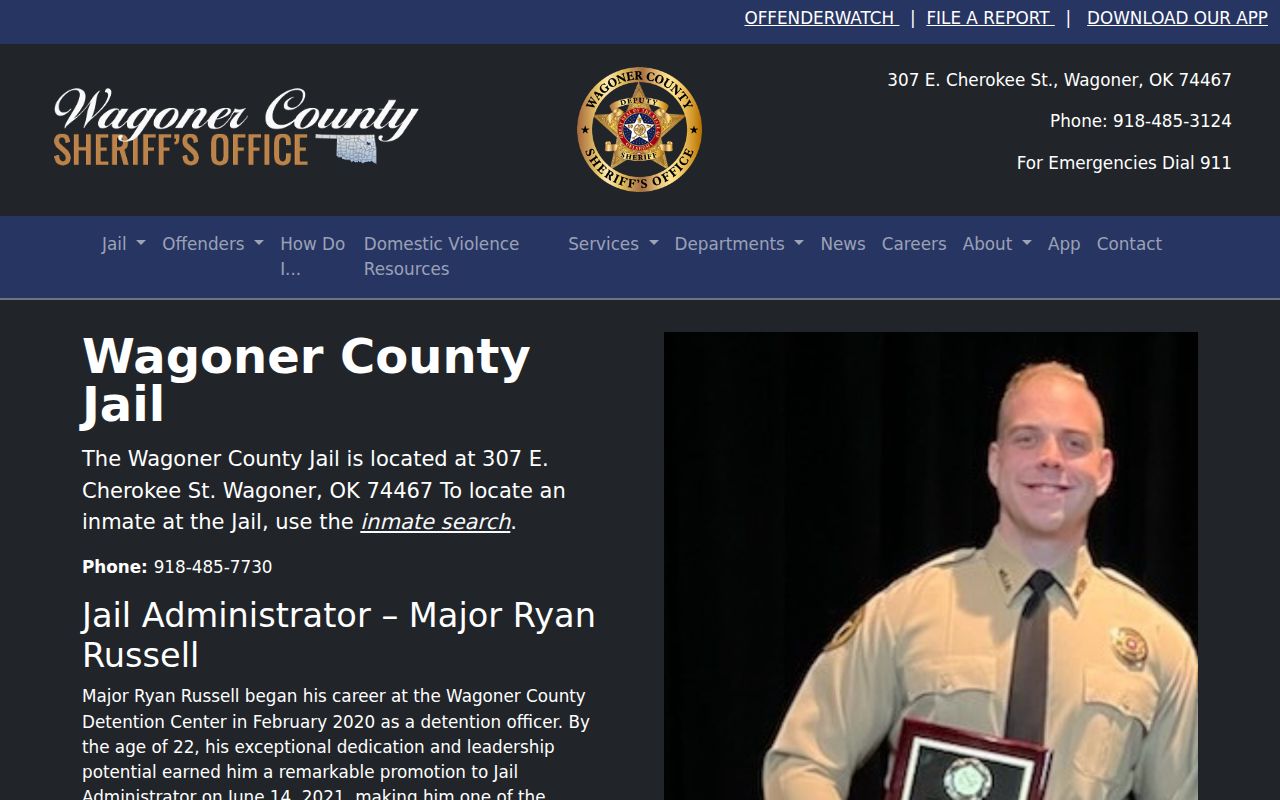
The Wagoner County Jail and the Sheriff's Office share one address, 307 E. Cherokee. The jail page lists 918-485-7730. The sheriff's own contact page lists 918-485-3124 as a 24-hour number. County materials say criminal and traffic bonds are posted at the Court Clerk's office, and the public pages establish no after-hours walk-in surrender schedule or separate public intake entrance. The jail's official page identifies a county custody channel rather than any individual record. Call before you drive over, and ask whether your question belongs to the jail, the sheriff, or the Court Clerk.
A booking or inmate-search result does not prove an arrest warrant was recalled or the Wagoner County case ended.
Serving Arrest Warrants in Wagoner County
The statute allows a warrant to run to a sheriff, marshal, constable, or police officer. In practice, a Wagoner County District Court matter can involve the Sheriff's Office, city police, another Oklahoma agency, or a task force. Municipal warrants follow the city code. A city marshal or police force often serves them. The sheriff's specialty units handle high-risk warrant service and fugitive recovery, though not every warrant gets that assignment. Interstate and federal matters run through OLETS, NCIC, the U.S. Marshals, and federal courts, all closed to a public county search. A local web result never replaces confirmation from the issuing agency.
Broken Arrow's Municipal and District Service Distinction
Broken Arrow shows why the service route matters. The city keeps municipal and District warrants separate, and it requires an out-of-state NCIC hit to be confirmed before service. That confirmation process belongs to officers, not to any public search product. A Broken Arrow citation can stay in its municipal court even when the person lives on the Wagoner County side. For a Wagoner County District Court charge, check OSCN or ODCR, then call the Wagoner Court Clerk at 918-485-4508 or the sheriff at 918-485-3124. A city complaint goes to the city court instead. The city citation portal is not a county arrest-warrant register.
Comparing Arrest, Summons, and Bench Warrants
A summons asks a person to appear and can avoid immediate custody. An arrest warrant goes further, authorizing an officer to take someone into custody once the complaint and probable-cause steps are done. A bench warrant answers a missed appearance, bail, fine, or compliance failure. Under municipal codes in Wagoner County, a summons or citation can turn into a city warrant after a nonappearance.
| Record | Starting point | Local confirmation |
|---|---|---|
| Summons or citation | Notice to appear | Issuing District or municipal clerk |
| Arrest warrant | Verified complaint and probable cause | Issuing court and sheriff or police |
| Bench warrant | Missed required court obligation | Issuing judge and clerk |
Bond Confirmation at the Wagoner Court Clerk
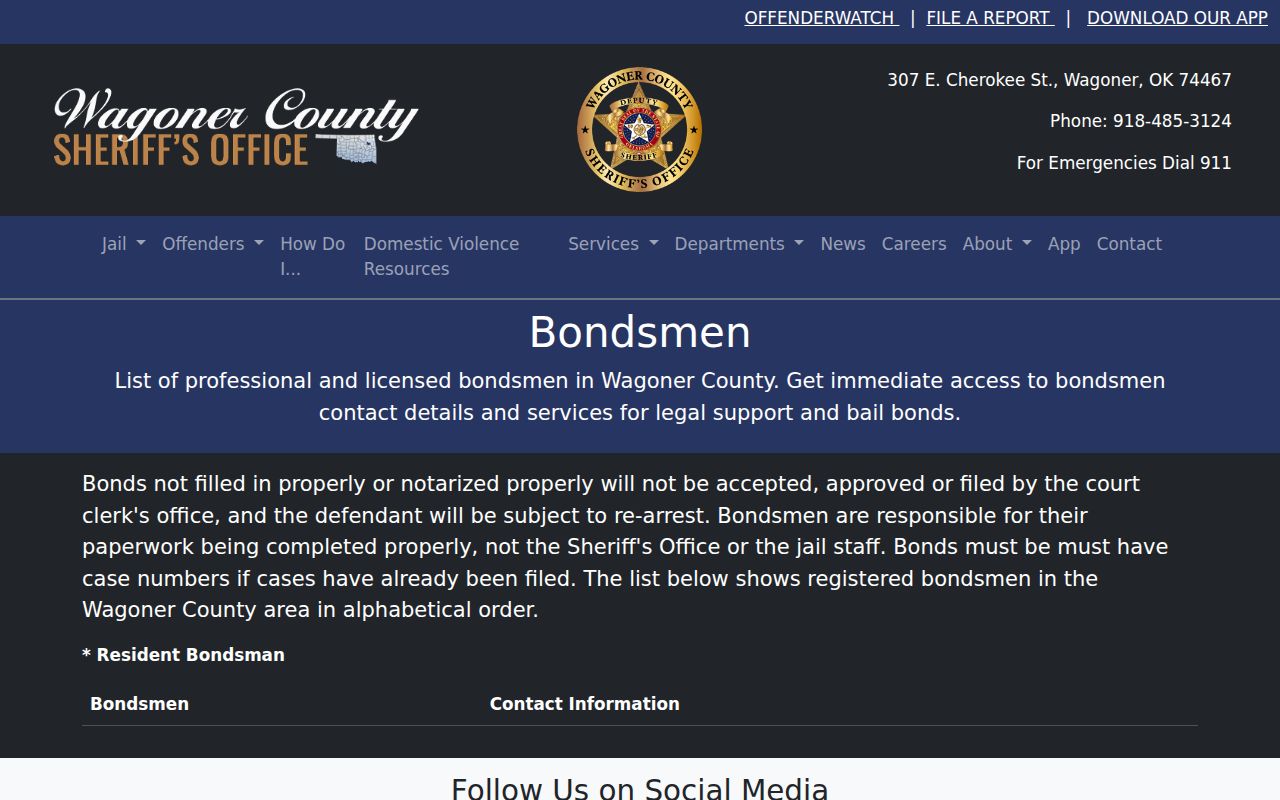
The sheriff publishes guidance for registered bondsmen and insists that papers be correctly completed, properly notarized, and tied to the case number when filed. Wagoner County has no universal public bond schedule. Ask whether the current condition is cash, surety, personal recognizance, no bond, or a decision held by the judge. The official bondsman rules explain paperwork boundaries only, not any person's bond amount or eligibility. Confirm the amount and accepted method with the Court Clerk or the sheriff.
A bond releases a person under conditions. It does not dismiss a charge, recall a separate city warrant, or end the underlying Wagoner County case.
If There's an Arrest Warrant for You
Confirm the basics first. Which court issued it, the case number, the charge category, and its current status. Then call the issuing clerk and the Wagoner County sheriff to learn where bond and booking questions belong. A defense attorney can also ask about a walk-through, a recall, a quash, or a new setting. No official Wagoner source promises that walking into a court or jail will spare you arrest or booking.
Do not guess: use the issuing court, sheriff, or counsel for current instructions before travel, and keep the court order or receipt that documents what happened.
The Court Clerk information page routes Wagoner County case questions, and the sheriff contact covers service or custody. For a city matter, call that city court instead.
Federal Warrants and the Muskogee Eastern District
Wagoner County sits inside the Eastern District of Oklahoma, so a federal arrest warrant never shows up on the county sheriff's list. That work belongs to the Ed Edmondson United States Courthouse in Muskogee and the U.S. Marshals Service. PACER can carry public federal case material. A sealed warrant stays hidden until unsealed or served. So ask one question early. Is the case state, municipal, or federal? That answer tells you which office to call. CourtListener and its RECAP archive sometimes supplement PACER when someone has contributed filings, but neither one is complete, and a thin result there says nothing about what the county holds.
Federal Arrest-Warrant Routing
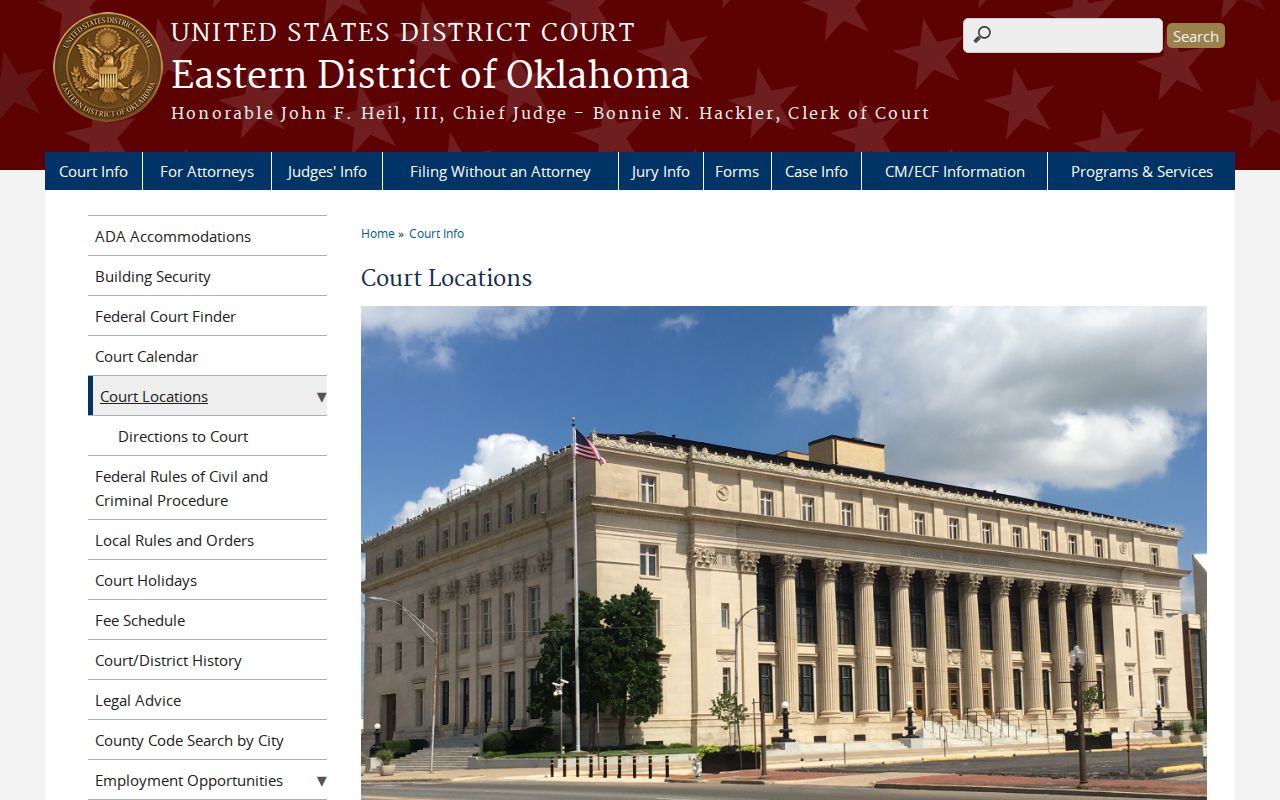
Federal warrant questions in this district go to the federal court and the U.S. Marshals, not the county sheriff. Wagoner County's list plays no part here. The official court-location page gives Muskogee contact details and keeps the federal layer separate from county warrant records.
For federal cases, turn to PACER or the clerk serving the Wagoner County area, since sealed warrants stay hidden.